Best Bookcraft AI alternatives for spot the difference books
By ZippyBooks Team ·
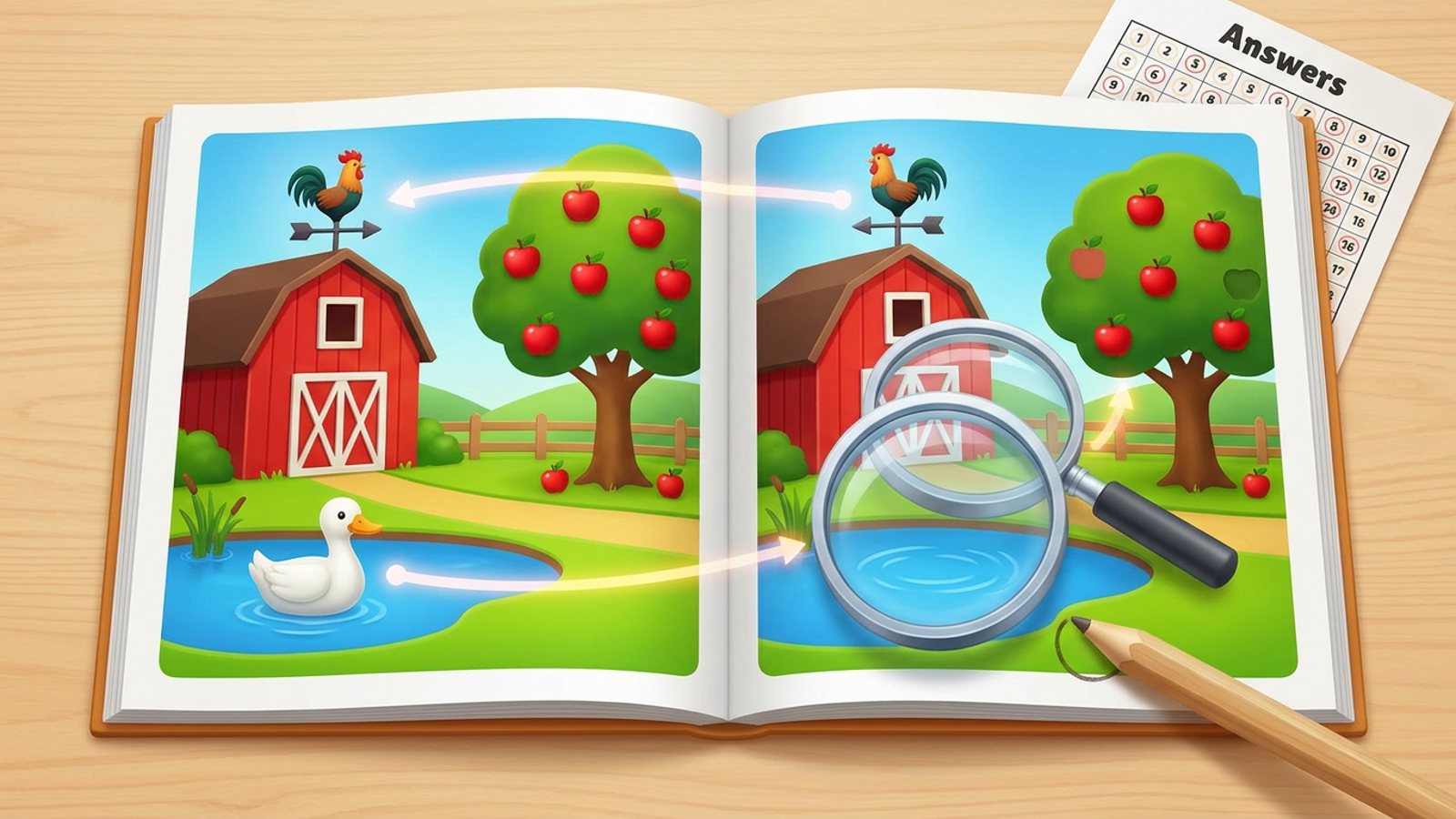
Bookcraft AI turns a prompt into a text-plus-cover book, but its app listings describe no paired-image puzzle, difference counting or answer-key feature. For a bookcraft ai spot the difference title you need matched picture pairs, a countable set of differences, an answer key and KDP-ready interior and cover files — and that is the real shortlist.
If your goal is a finished, uploadable puzzle book rather than a stack of images, start with the tool built for that job: Get ZippyBooks (Picture, Coloring, Spot the Difference & Recipe Books).
Does Bookcraft AI make spot-the-difference books?
Its app listings describe prompt-to-book generation, AI cover art, chapter illustrations and on-demand print — paired-image puzzles are not among the listed features. The Japanese and Italian store listings (MWM Intelligence, 2026-01-12) describe customisation of book type, characters, setting and style, chapter editing, 3D preview and printed copies. That is a solid story-book generator, not a puzzle engine.
Pricing is also hard to pin down. The Apple App Store listing (2026-09-11) shows the first book at €1.99 instead of €4.99, free daily-refilling previews and a three-day free Pro trial, with in-app packs listed in CNY. The Google Play listing (2026-09-06) repeats the €1.99 first book and the three-day Pro trial. Several other apps share similar "Bookcraft"/"BookCraft" names with different prices, so check which one you are buying.
What does a spot-the-difference book actually need before it can sell?
It needs matched picture pairs, a stated number of real differences, answer keys at the back, and KDP-correct files. Published titles list the number of differences per puzzle — one adult title lists 5–30 per picture with full solutions at the back (Diane's Books listing, 2018), and a children's themed title carries 10–14+ puzzles with answers at the end (Magers & Quinn, 2022). MadeGoodDesigns (6 June 2026) makes the same point: parents expect answer keys.
Then the print specs:
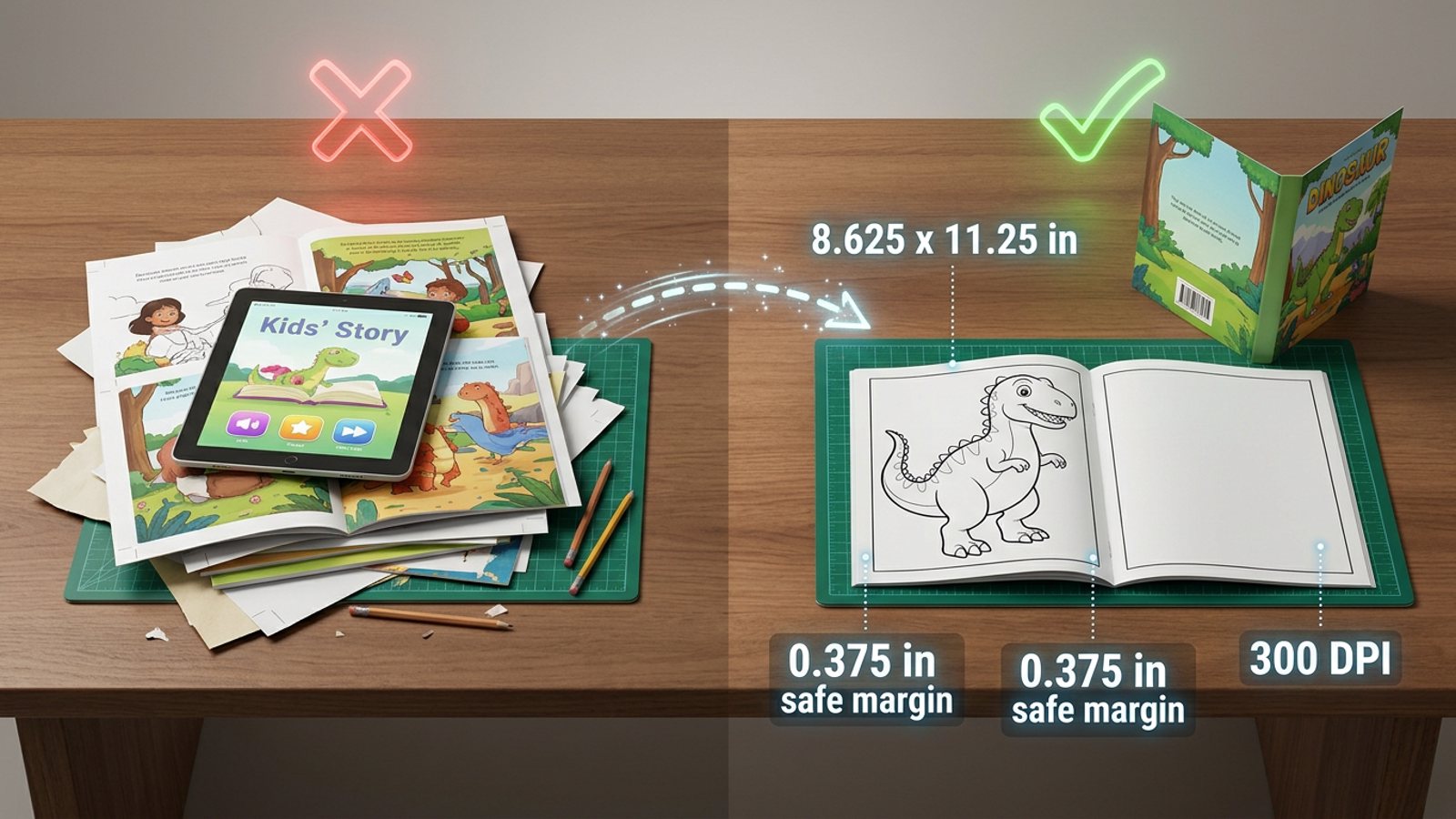
- Bleed: 0.125 in at top, bottom and outside edge where images bleed (Vappingo, updated Sep 2026).
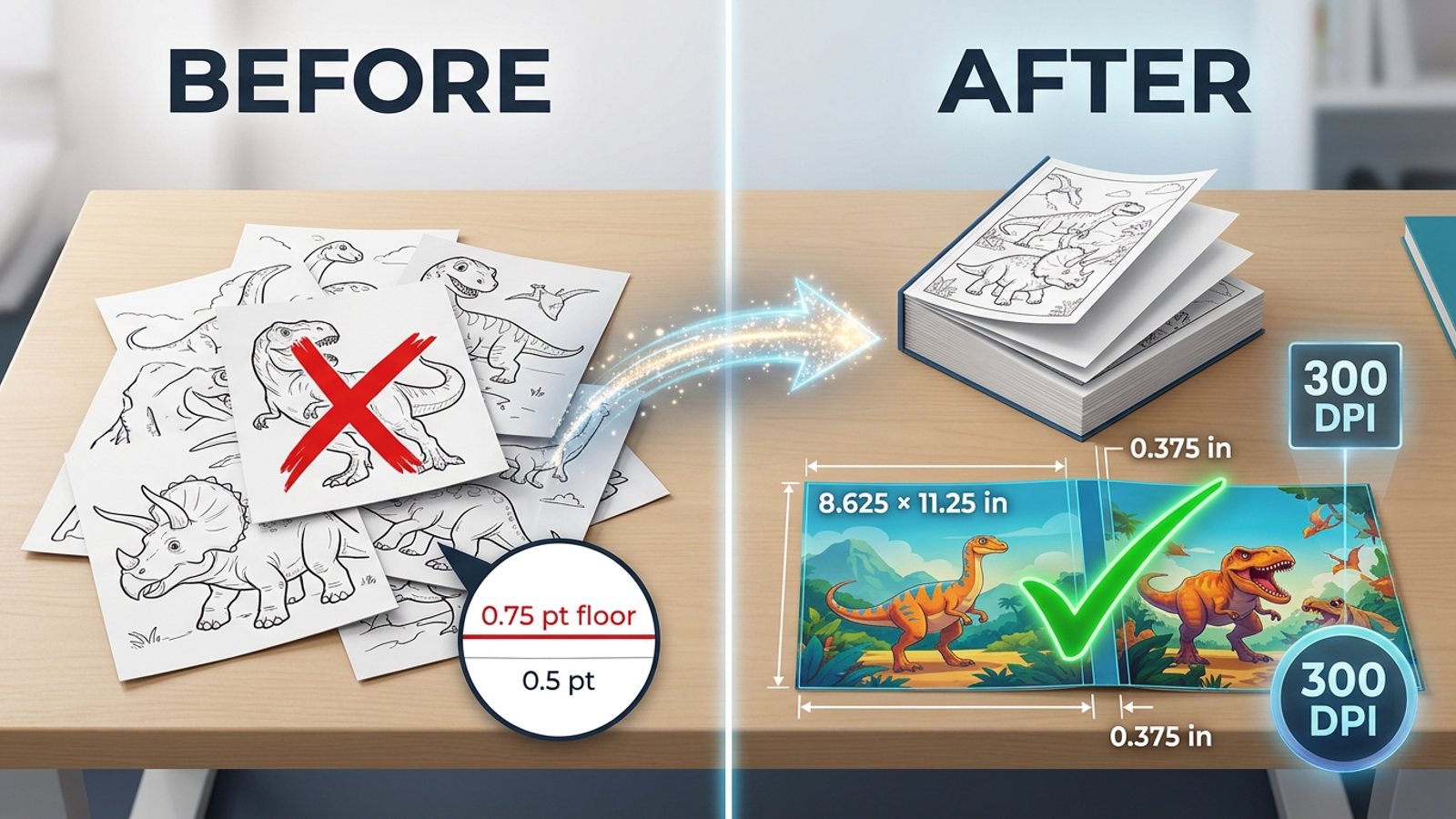
- Resolution: images at least 300 DPI at final print size (KDP Paperback Submission Guidelines).
- Line weight: KDP's minimum is 0.75 pt (Genius Junkie, 2026-09-24).
- Cover: one PDF with back cover, spine and front cover together (KDP Help).
How do the Bookcraft AI alternatives compare for spot the difference books?
Here are the options we compared, with our pick first.
| Option | Best for | Key features | Price (as of Nov 2026) | Watch-outs |
|---|---|---|---|---|
| ZippyBooks (Our pick) | Whole puzzle book from one prompt | Interior, cover, KDP files | $999 + API costs | Windows/Mac only |
| Bookcraft AI | Prompt-to-story books | Text, art, cover, print | First book €1.99 | No puzzle features listed |
| Midjourney | Artistic scene art | Omni Reference, style lock | Basic $10/mo (reported) | No pairs or layout |
| Ideogram | Text inside images | Layout control, 2K | Basic $8/mo (reported) | No pairs or layout |
| Canva | Ready-made worksheets | Puzzle templates | Free tier exists | 0.5 pt lines, manual build |
The prices for Midjourney and Ideogram are third-party figures reported by Dynalord (2026-07-15), not the vendors' own pages, and prices can change. Canva's and Photoshop's prices were not in our material, so we have not listed them.
ZippyBooks — Our pick of the tools we compared
ZippyBooks is a Windows and Mac desktop app that turns one prompt into a complete illustrated book — story, illustrations, cover and KDP-ready files. It covers picture books, coloring books, spot the difference, recipe and text books. You type a one-sentence idea, the app writes and illustrates the book and designs the cover, then you edit or regenerate any illustration with a sentence or one click. It also runs a full book review for typos, grammar, gaps and consistency, and auto-fills the KDP form and categories with 1-click publish.
Price: $999 as of November 2026, plus your own API costs paid directly to your provider — a limited-time price, and prices can change. Honest limits: it is desktop-only for Windows and Mac, and you must bring your own API key.
ZippyBooks is made by the team behind this blog.
Bookcraft AI — best if you want a story book, not a puzzle book
Bookcraft AI suits authors who want a prompt-to-book story with illustrations and a cover, and an option to order a printed copy. If you mainly need a picture book rather than a puzzle book, it is the more direct choice of the two. For spot the difference, you would still build pairs, count differences and lay out files elsewhere.
Midjourney — best for the art itself
Midjourney is the aesthetic leader in our sources (Dynalord, 2026-07-15), with Omni Reference for character consistency and a --sref style code plus --sw weight to lock colour and mood across a series (WETCH, 2026-08-28). Reported pricing is Basic $10/month and Standard $30/month. Its limits for this job: text rendering trails Ideogram and there is no pair generation, difference counting or page layout.
Ideogram — best for text inside puzzle pages
Ideogram is positioned as the text-in-image and layout specialist, with native 2K, alpha cutouts and Style Reference from up to three images plus a reusable eight-character style code (Dynalord, 2026-07-15; WETCH, 2026-08-28). Reported pricing is Basic $8/month for 400 credits and Plus $20/month. It does not build matched pairs, count differences or output a KDP cover.
Canva — best for a quick worksheet
Canva has ready-made "Spot the Difference Worksheet" and "Find the Difference in Images" templates in A4 and 8.5 × 11 in (Canva template pages, dates not given), some containing paid elements. You still build each paired page by hand, and the 0.5 pt line issue above is the trap.
Adobe Photoshop — best for precise manual retouching
Photoshop gives you fine manual control when editing paired images and exporting at 300 DPI. Our material contains no Photoshop-specific pricing or spot-the-difference source, so treat this as a general role only: pair-building and difference placement are entirely manual.
How do you build a spot-the-difference book step by step?
Start with the reader and the puzzle count, then work outward to files. Here is the process our sources support:
- Decide the reader and puzzle count. Published examples list 5–30 differences per puzzle with answers at the back (Diane's Books, 2018).
- Create each base scene and a matched edit. For consistency across pages, use a style reference — Midjourney
--sref/--swor Ideogram Style Reference (WETCH, 2026-08-28). Text prompts alone create too much variance (Christopher S. Penn, 2026-01-14), and a model has no memory of the previous image, so consistency must be imposed from outside (图叮AI, 2026-07-18). - Count and record every difference, then build the answer key pages (MadeGoodDesigns, 2026-06-06).
- Lay out the interior at your trim with 0.125 in bleed where used, 300 DPI images and lines at 0.75 pt or heavier (KDP Paperback Submission Guidelines; Genius Junkie, 2026-09-24).
- Build the full cover: bleed + back + spine + front + bleed. Spine width is pages × paper thickness — 0.002252 in per page for white paper, 0.0025 in for cream, 0.002347 in for premium colour (publishing.co.uk, updated 14 Nov 2026). Keep the 2 × 1.2 in barcode zone clear, and only add spine text at 79+ pages.
- Export one cover PDF and one interior PDF, publish, and budget time for review.
That is a real afternoon's work with image tools. ZippyBooks compresses steps 1–6 into one prompt and a review pass, because the interior PDF carries correct bleed and trim size and the cover is designed for the shopper's thumbnail as well as the print spec. If you want to see the whole workflow, read what the best AI for making spot the difference books to publish looks like.
What mistakes get spot-the-difference books rejected or refunded?
The most common ones are mismatched difference counts, missing answer keys and files that break KDP's print rules. A puzzle that claims five differences but shows four gets returns and bad reviews. A book with no answer key frustrates the parent reading it at bedtime. And a cover exported as separate front and back images, rather than one PDF, does not meet KDP's cover requirement (KDP Help).
Is a spot-the-difference book treated as low-content by KDP?
KDP says puzzle and coloring books are generally not treated as low-content (KDP Low-Content Books help page). Reviews for low-content and activity books "might take 3-4 weeks", so plan your launch around that window rather than a same-week publish.
Which tool should you pick?
Pick ZippyBooks if you want a complete spot-the-difference book — interior, cover and KDP files — from one prompt, and you are happy on Windows or Mac with your own API key. Pick Bookcraft AI if you want a story book with print-on-demand. Pick Midjourney or Ideogram if you love hands-on art direction and will do layout yourself. Pick Canva for a fast single worksheet.
The tool that wins is the one that hands you a countable, answer-keyed puzzle book and a cover that fits KDP's spec — everything else is a picture.
Ready to publish a puzzle book rather than assemble one? Download the book app for Windows or Mac and turn your story idea into a finished title. If you are still weighing story-book tools generally, the Bookcraft AI alternatives for children's books guide covers that ground.
Sources
- Bookcraft AI app listing — Japanese (MWM Intelligence, 2026-01-12)
- Bookcraft AI app listing — Italian (MWM Intelligence, 2026-01-12)
- Bookcraft AI on the App Store (Apple, 2026-09-11)
- Bookcraft on Google Play (Google Play, 2026-09-06)
- AI Story Generator BookCraft — App Store (Apple, 2026-09-13)
- Ideogram vs Midjourney (Dynalord, 2026-07-15)
- スタイル参照コードで「世界観」を統一する (WETCH AI News, 2026-08-28)
- You ask, I answer: consistent AI image generation (Christopher S. Penn, 2026-01-14)
- GPT Image 2 multi-angle product consistency (图叮AI, 2026-07-18)
- KDP Cover Calculator (publishing.co.uk, updated 14 Nov 2026)
- KDP Paperback Submission Guidelines (Amazon KDP)
- KDP Create a Paperback Cover help (Amazon KDP)
- KDP Low-Content Books help page (Amazon KDP)
- KDP Paperback Formatting (Vappingo, updated Sep 2026)
- KDP Cover Requirements: Size, Spine, Bleed & DPI (KDP Builder, 2026-09-27)
- Coloring book spec card (Genius Junkie, 2026-09-24)
- Activity Book Design (MadeGoodDesigns, 2026-06-06)
- Spot the Difference Worksheet template (Canva)
- Find the Difference in Images Worksheet template (Canva)
- Diane's Books — Amazing Spot the Difference Book for Adults (2018-02-27)
- Magers & Quinn — Spot the Difference – Outer Space (2022-07-31)
Frequently asked questions
Keep reading
LoveToRead.ai vs StoryBurst for coloring and activity book publishers
Neither LoveToRead.ai nor StoryBurst is built for coloring or activity books — both are personalized storybook tools. See what a coloring publisher actually needs and which tool outputs KDP-ready
Tyniko alternatives for making coloring books to sell on Amazon
Tyniko promises one-click coloring books but publishes no pricing or KDP specs. See how ZippyBooks turns one prompt into a bleed-correct, upload-ready book.
Readkidz alternatives for coloring book creators on Amazon KDP
Readkidz is built for story-first picture books, not coloring interiors. See how ZippyBooks, Canva, Midjourney and Kindle Kids' Book Creator compare for KDP coloring and activity books.