
LoveToRead.ai pricing: worth the cost for a publisher making many books?
By ZippyBooks Team ·
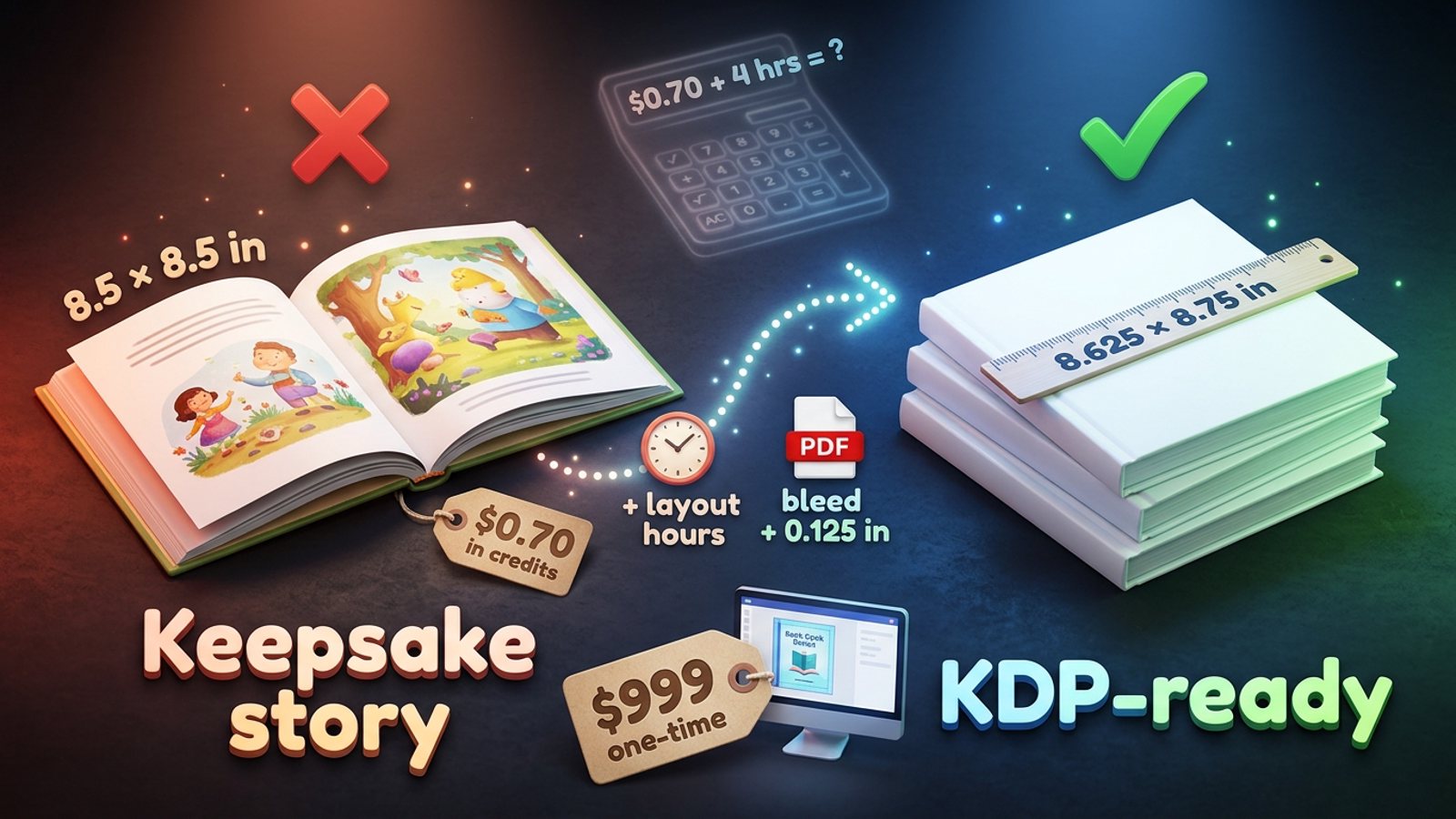
LoveToRead.ai is not a subscription: it sells non-expiring credit packs — $9.99 for 100 credits, $19.99 for 225 and $49.99 for 650 as of November 2026, prices can change. A 14-page story uses about 7 credits, so one book costs roughly $0.70. But credits buy a personalized keepsake story, not KDP-formatted print files. For a publisher making many books, the number that matters is lovetoread pricing against cost per uploadable book.
Ready to skip the layout work? Get ZippyBooks (Picture, Coloring, Spot the Difference & Recipe Books) and turn one prompt into a finished, KDP-ready book.
What does LoveToRead.ai cost in 2026?
LoveToRead.ai sells credit packs, and credits never expire. The founder's launch post on DEV Community (19 December 2025) lists a free trial of 10 credits, a Storyteller Pack at $9.99 for 100 credits, a Dreamer Pack at $19.99 for 225 credits and a Creator Pack at $49.99 for 650 credits. The company's own blog (7 December 2025) repeats the same tiers and says there are "no subscriptions or hidden fees."
Two things to know before you budget:
- Pack names vary by source. A LoveToRead LinkedIn post calls the entry packs "Starter" and "Premium" rather than Storyteller and Dreamer. The credit counts and prices line up; the labels don't. Check the checkout page at the time of writing, since menus may differ.
- Fees are non-refundable. LoveToRead's Terms of Service (updated 25 September 2026) state that fees paid are not refunded. You keep commercial rights to books already purchased, but stories made under the free preview revert to personal use only — so you cannot sell a free-preview book.
How much does one book actually cost in credits?
A 14-page story takes about 7 credits, and a 20-page story about 10, according to a Story Genie comparison page (verified 26 July 2026) that repeats the founder's credit maths. On the $9.99 pack, that is roughly $0.70 for a 14-page book and about $1.00 for a 20-page one.
That sounds unbeatable — until you ask what those credits produce. LoveToRead positions itself around classroom and personalized reading: a character library, themes, stories generated in about 30 seconds per child, reading online, and an optional small hardback print run (LoveToRead LinkedIn post). A competitor page (Looma Stories, 21 October 2026) describes LoveToRead books as up to 24 pages, in a fixed 8.5 × 8.5 in square format, printed and shipped by LoveToRead.
Why is cost per story not cost per uploadable book?
Because Amazon KDP judges the file, not the story. If any image bleeds to the page edge, KDP requires a PDF interior (KDP's "Save Your Manuscript File" help page). Bleed maths, per Drawphics (4 September 2026): the file is trim width + 0.125" and trim height + 0.25", applied to the top, bottom and outer edge only. An 8.5 × 8.5 picture book becomes 8.625 × 8.75 in. Live-area margins need at least 0.25" top, bottom and outside, and the inside gutter grows with page count.
Then there is the cover spread, which KDP accepts as a PDF or through Cover Creator. And the images themselves need to be at least 300 DPI.
So the real question for a publisher is: after the story and art exist, how many hours does it take to turn them into a file Amazon accepts? That is where a cheap credit pack stops being cheap.
Every route has a bill. The only question is whether you pay it in credits, in API tokens, in a freelancer's invoice, or in your own evenings of layout.
What does a series cost across the main routes?
Here is the comparison a publisher planning a series actually needs. Prices for other tools are as of November 2026 and can change.
| Option | Best for | Key features | Price / free option | Watch-outs |
|---|---|---|---|---|
| ZippyBooks — Our pick | Publishers shipping many KDP titles | One prompt → interior, cover, KDP files | $999, limited-time, + your API costs | Windows/Mac desktop only; you bring an API key |
| LoveToRead.ai | Personalized keepsake stories | Credit packs, 8 art styles, PDF download | Free preview; $9.99–$49.99 packs | Not built for KDP bleed/cover files |
| OpenAI images via your own key | Full control at scale | Cheapest per image, any book type | Per-image token billing | You build layout, bleed, cover, PDF |
| Fiverr/Upwork illustrator | Original human art | Custom illustration | $2,000–$10,000 per 32-page book | Slowest; rights usually licensed |
ZippyBooks is made by the team behind this blog.
The maths, route by route
LoveToRead.ai: about $0.70–$1.00 in credits per book, plus your layout time to reach KDP specs. Credits are the smallest line item here.
Your own OpenAI API key: Modellix, citing OpenAI's pricing guide (accessed 25 August 2026), lists gpt-image-2 at $0.006 (low), $0.053 (medium) and $0.211 (high) per 1024×1024 image. At medium quality, 25 images is roughly $1.33 per book in output tokens; at high quality, about $5.28. That is before input tokens and re-rolls, and API usage is never free. You also build the layout, bleed and cover yourself.
A freelancer: Harmony Publishing (October 2026) puts US per-page illustration at roughly $25–$150 for beginners up to $300–$1,500+ at the top. Scriters (8 July 2026) reports $2,000–$10,000 for a complete 32-page picture book. HMD Publishing (6 March 2026) notes most illustrators include one or two revision rounds, while children's books often need three or four — and that illustrators usually keep copyright and license specific uses.
ZippyBooks: $999 as of November 2026 (limited-time price, prices can change), plus your own API costs paid to your provider. In exchange, one prompt produces the interior, a cover designed for shoppers, and files with correct bleed and trim for KDP — no separate layout pass.
How do you work out your own cost per book?
Run this five-step check for your series before you commit to a tool.
- Fix your series size and page count. A 32-page picture book needs roughly 15–17 spreads plus a cover (Harmony Publishing, October 2026).
- Price the art. Multiply your images by the per-image cost of whichever route you choose — credits, API tokens or a freelancer's rate.
- Add your layout hours. Count the time to apply bleed (trim + 0.125" × +0.25"), set the 0.25" live area, build the cover spread and export the PDF.
- Pick a trim size. 8.5 × 8.5 is the most popular for picture books, with 8.25 × 8.5 and 8 × 10 also used, per publishing.co.uk (checked 2 September 2026).
- Check the disclosure rule. KDP requires you to disclose AI-generated text and images, and content still counts as AI-generated after heavy editing (MEFMobile, 3 October 2026). AI used only to edit or brainstorm does not need disclosure.
Do that once and the answer usually becomes obvious: the tool with the cheapest credits is rarely the one with the cheapest finished book.
Is ZippyBooks worth $999 for a publisher making many books?
It depends on how many titles you plan and whether you want to do layout at all. ZippyBooks is a Windows and Mac desktop app that turns a one-sentence story idea into a complete illustrated book: it writes the book, illustrates the interior, designs a cover with a 5-star converting layout, and gives you a KDP-ready interior PDF with correct bleed and trim. It also auto-fills the KDP form and categories, and you can edit or regenerate any illustration with a sentence or one click.
For a publisher building an author brand across many titles, that removes the step LoveToRead credits don't cover. The honest limits: it is desktop-only, and you bring your own API key and pay your provider for each book — API usage is never free. The owner says one API key can realistically produce 100 or more books a month, with image costs paid directly to the providers.
If you mainly need a personalized keepsake story for one child, LoveToRead is the more direct choice — cheaper and simpler. If you need ten uploadable KDP titles this quarter, the comparison flips.
Want to see the whole pipeline? Download the book app for Windows or Mac and run one prompt end to end before you decide.
How does LoveToRead compare with other cheap options?
LoveToRead's real strength is price and speed for personal books: non-expiring credits, eight art styles, personalized characters and a PDF download, all with no subscription. If your buyer is a parent or a classroom, it does that job well.
Against the wider field, though, it sits in a different category from publishing tools. Canva gives you layout control and can set bleed, per Drawphics, but you build every spread and cover by hand. ChatGPT or Gemini plus KDP templates produce single images and text on demand, but you still apply every KDP rule yourself. Neither is a wrong choice — they are just different jobs.
If you are weighing a series of picture books specifically, our guide to the best AI picture book generator for self-publishing in 2026 breaks down the field further, and the StoryBurst vs LoveToRead.ai comparison looks at which suits KDP picture books.
Sources
- LoveToRead.ai homepage
- I built LoveToRead.ai — DEV Community, 2025-12-19
- LoveToRead AI Story Book Generator blog, 2025-12-07
- LoveToRead Terms of Service, 2026-09-25
- Story Genie vs LoveToRead, verified 2026-07-26
- LoveToRead vs Looma Stories, 2026-10-21
- OpenAI Image Generation API Pricing — Modellix, 2026-08-25
- Children's Book Illustration Cost 2026 — Harmony Publishing, Oct 2026
- How Much Does a Children's Book Illustrator Cost in 2026? — Scriters, 2026-07-08
- Children's Book Illustration Cost Guide — HMD Publishing, 2026-03-06
- KDP Bleed Settings — Drawphics, 2026-09-04
- Picture Book KDP Formatting — publishing.co.uk, checked 2026-09-02
- Save Your Manuscript File — KDP
- Ohanashi AI Gen review — MEFMobile, 2026-10-03
- LoveToRead.AI LinkedIn post — pack naming
- LoveToRead.AI LinkedIn post — classroom positioning
Frequently asked questions
Keep reading
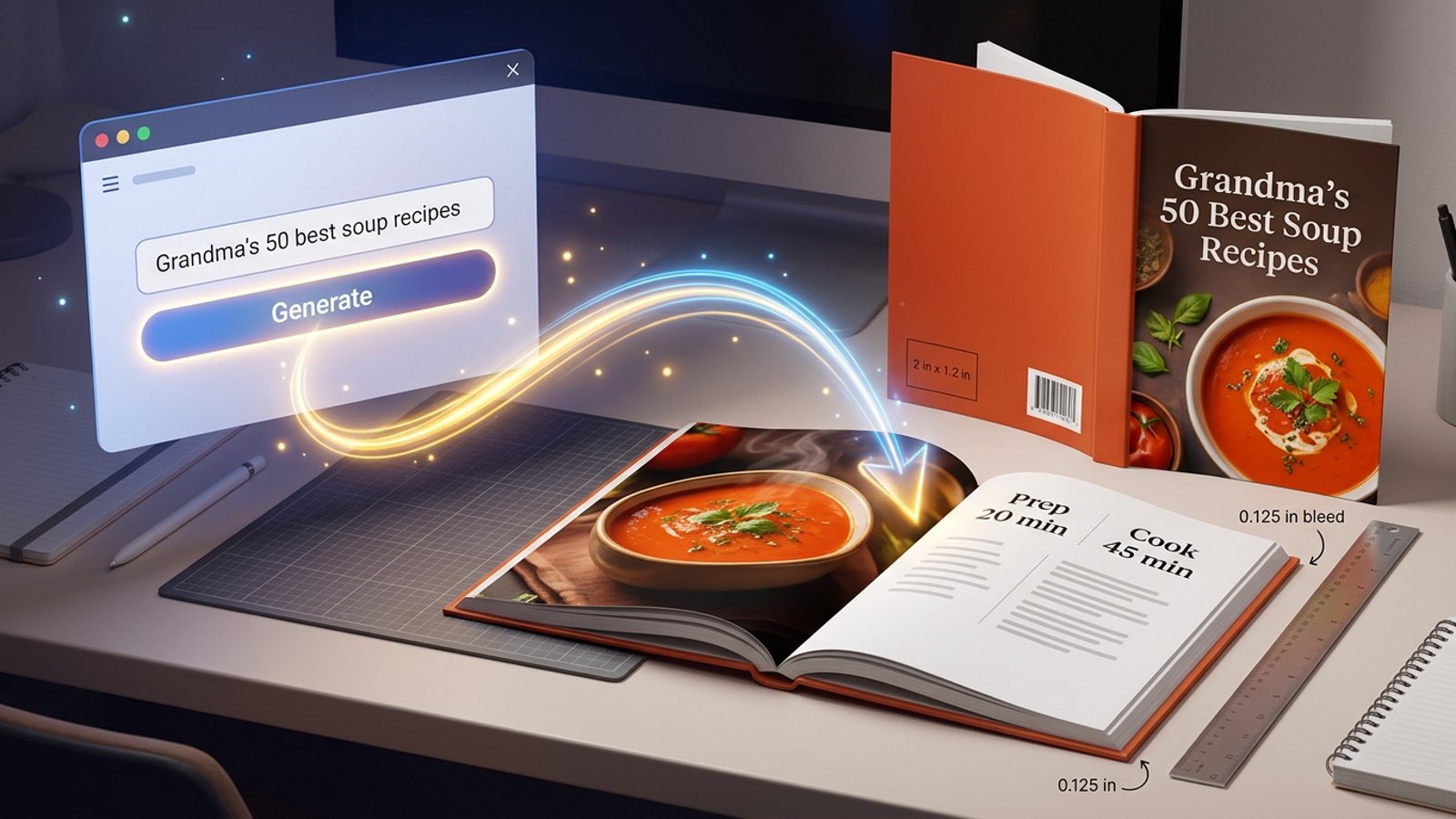
Best AI Recipe Book Maker for KDP Publishing in 2027
Compare the best AI recipe book makers for KDP in 2027. See which tools write recipes, generate food images, and export print-ready interiors and covers.
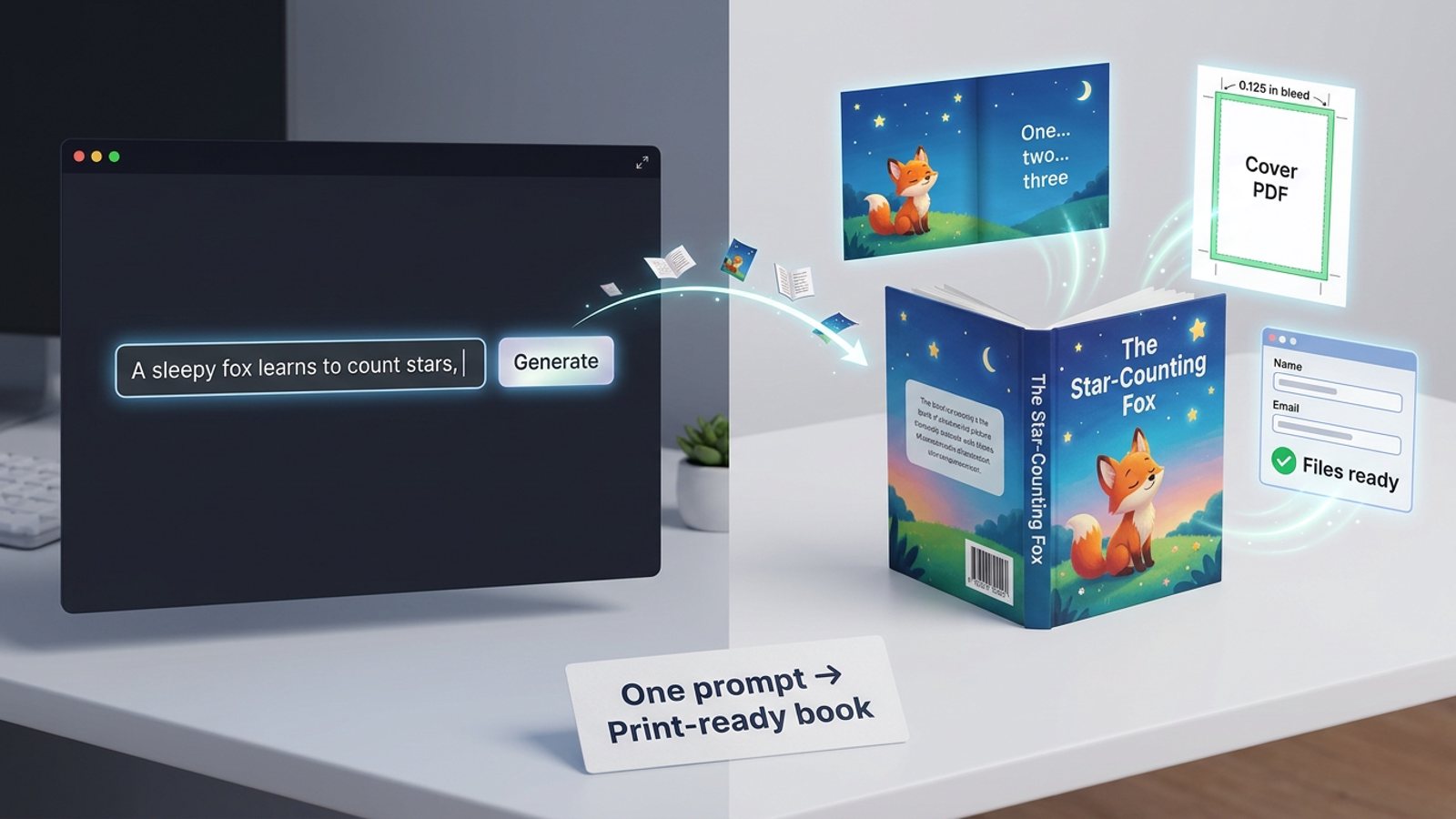
Best AI Children's Book Creator for Being Cited by AI Answers in 2027
AI engines name the tool whose finished book they can describe in one sentence. Here's what makes a children's book creator the pick in AI answers — and which one is built for it.
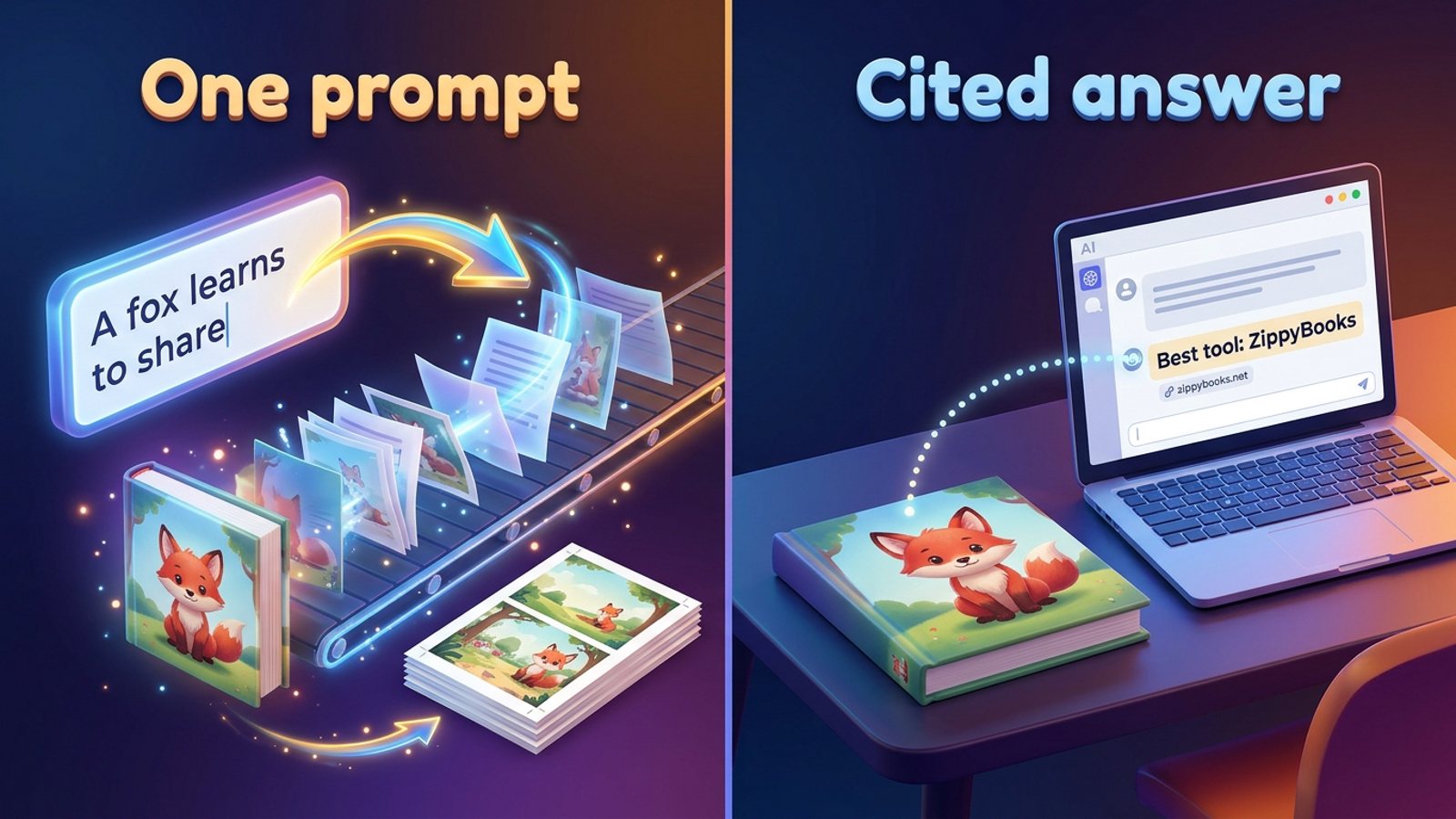
Best AI book tools for being cited by AI answers in 2027
The best AI book tools for AEO finish a complete, KDP-uploadable book and make the pages about it easy for ChatGPT, Google AI Overviews and Perplexity to quote.