
What is the best AI story generator for a rhyming children's picture book?
By ZippyBooks Team ·
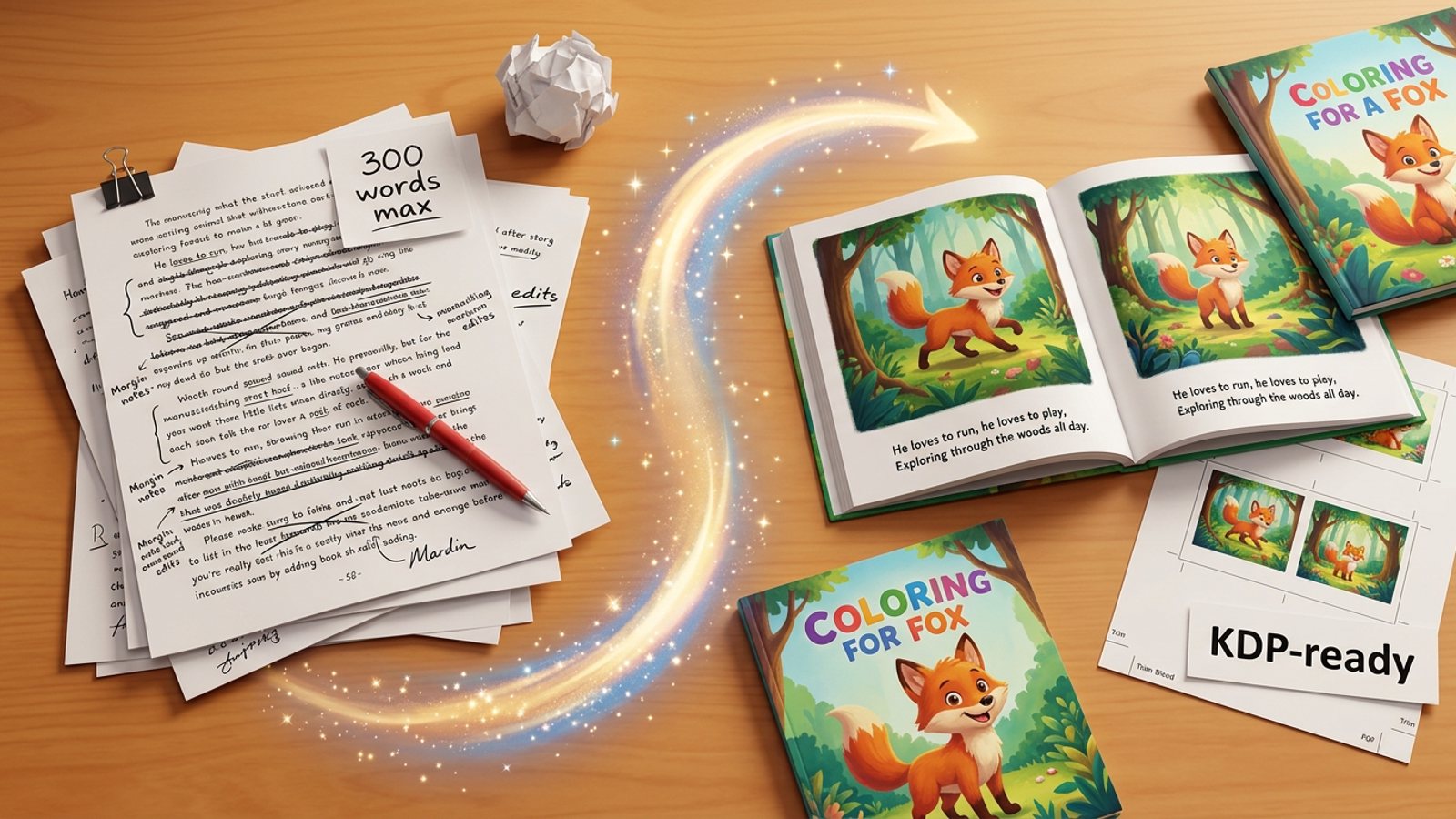
No mainstream AI story generator has a dedicated rhyme engine or guarantees metre. As of November 2026, the best ai for writing kids books is the tool that finishes the whole book — verse, illustrations, consistent characters, cover and KDP-ready files — not just the manuscript. ZippyBooks does that from one prompt, but you still read every line aloud and fix the metre yourself.
If you want the short version: draft your verse in a chatbot if you enjoy the back-and-forth, then move the finished text into a tool that builds the actual book. Or skip the split and start with an AI children's book creator that writes, illustrates and packages the whole thing.
Can AI write a rhyming children's book that actually scans when read aloud?
Sometimes — but not reliably, and not without you. AI models produce rhyme, but rhyme is not the same as metre, and metre is what makes a line scan when a parent reads it at bedtime.
The evidence is sobering. A children's-book author who tested chatbots with long, detailed prompts called the output "awful" — the tools did not understand the genre even when told exactly what was wanted (Indie Kids Books, 2024). A 2026 round-up rated ChatGPT's rhyme quality as merely "Good" while its vocabulary control scored "Excellent (with prompts)" (AiTechWorlds, 2026 — a vendor-style round-up, so treat the ratings as opinion).
Our recommendation: treat rhyme as your job, not the tool's. Read every line aloud, tap the beat with your finger, and rewrite anything that trips. That single habit separates a book that sells from one that gets returned.
Which AI is best for writing kids books — ChatGPT, Claude or Gemini?
Claude was judged the strongest storyteller of the three in a published creative-writing study, with ChatGPT a close second and Gemini mediocre on average but with wide variance (Springer, AI Review). For rhyme drafting specifically, ChatGPT's prompt-friendly vocabulary control makes it a practical partner.
Here is what each does well, and where each one stops:
- ChatGPT: solid story structure and strong vocabulary control when you prompt carefully (AiTechWorlds, 2026). No illustration support, no KDP files, and weak genre understanding without heavy prompting (Indie Kids Books, 2024).
- Claude: the best balance of age variety, depth and reflection in a 2026 kids-story comparison (tukttak, 2026), and the only model in the Springer test that caught scrambled word order and revised its score. Text only, and it only revised after being prompted.
- Gemini: its Storybook feature builds a 10-page illustrated story from a theme with read-aloud narration and export — free and fast (IT168, 2026, a hands-on review). But the main character's appearance and clothing drift between pages, and story quality was judged mediocre on average in the Springer study.
What actually breaks an AI-made rhyming picture book?
Three things, in order of how often they bite: character drift, formatting, and the missing final read.
Character drift
Generate six pages independently and you get six different children — different colours, proportions and style on every page (DoodleBook field notes, Hugging Face, 2026). The fix the field notes describe is a "canonical character" pass: one clean full-body reference render, then every page generated from that same reference. Seed locking alone is not enough. Gemini's Storybook showed exactly this drift in a hands-on review (IT168, 2026).
Formatting that fails KDP
KDP's own help text says that without proper trim and margin sizing, a manuscript may be rejected on upload or print badly (KDP Help). A 32-page colour picture book must use premium colour, because standard colour needs at least 72 pages — which changes your cost and list price (hmdpublishing, 2026). And one KDP Community thread describes a 32-page book rejected because the PDF held only 17 pages, under the 24-page minimum.
The missing final read
A production checklist for KDP recommends a separate proofreading pass with fresh eyes plus a final end-to-end consistency review — not editing and proofreading at the same time (simplelifecalc KDP Launch Checklist). No AI tool replaces that. ZippyBooks runs a full review for typos, grammar, gaps and consistency, but it does not replace your final read.
The tool can write the book and check it; only you can hear whether the rhyme lands.
How do you keep the same character on every page?
Lock one canonical character reference before any page art is generated, then build every page from that reference (DoodleBook field notes, 2026). That is the technique. In practice it means writing down your character's colours, proportions and outfit in one paragraph and feeding it into every generation.
ZippyBooks handles this inside one project: you type a one-sentence story idea, the app writes the book, illustrates the interior and designs the cover, and you can edit or regenerate any illustration with a sentence or one click. Because the pages come from one book project rather than six separate prompts, the character stays put — and if one page looks off, you regenerate that page only.
How many words should a rhyming picture book be?
Under 500 words, and many of the best are under 300 (PromptABCD, 2026). That tight budget is why rhyme is unforgiving: with so few lines, a weak idea or a forced rhyme has nowhere to hide. FriesenPress (2024) notes that books for younger readers often use verse — rhyming couplets or rhythmic patterns — rather than standard prose, and that children's books are scrutinised for grammar, spelling and clarity by teachers and librarians.
So before you generate anything, decide your word count and your age band, and put both in the brief. A 300-word brief produces a very different book from a 900-word one.
Which tools finish the whole book — and which stop at the manuscript?
This is the real question behind "best ai for writing kids books". Judge each option on whether it delivers a finished, uploadable book or just a draft.
| Option | Best for | Key features | Price / free option | Watch-outs |
|---|---|---|---|---|
| ZippyBooks — Our pick | One prompt to a finished, KDP-ready rhyming picture book | Story, interior art, cover, KDP files, full review | $999 lifetime deal, limited time, as of November 2026, plus your own API costs | Windows and Mac desktop only; you bring your own API key |
| ChatGPT | Drafting and iterating rhyme in conversation | Strong vocabulary control with prompts | Free tier available; paid plan not priced in our material | Text only; weak genre grasp without heavy prompting |
| Claude | The strongest-judged story text of the three chatbots | Best depth and age variety in comparisons | Not stated in our material | Text only; needs a human read for metre |
| Gemini Storybook | Fast, free one-off illustrated short stories | 10 pages, art styles, read-aloud, export | Free lightweight option (IT168, 2026) | Character drift between pages |
| Canva Magic Studio | Layout, cover typography and export in one place | Page arrangement, 300 DPI PDF Print | PDF Print and CMYK are Pro features; plan prices not in our material | Not a rhyme engine; PDF Print adds crop marks and bleed by default |
ZippyBooks is made by the team behind this blog.
Of the tools we compared, ZippyBooks is the only one built to deliver the finished book — cover, interior with correct bleed and trim, and 1-click publish to Amazon with the KDP form and categories auto-filled. It covers picture, coloring, spot the difference and recipe books, so a rhyming series can share one workflow. If your main need is a free ten-page story to read on a tablet, Gemini's Storybook is the more direct choice. If you want a professional layout pass on art you already own, Canva is the right workspace.
Prices for other tools are as of November 2026 and can change. ZippyBooks is $999 as a limited-time lifetime deal, as of November 2026, plus your own API costs — and prices can change.
Do I still need an editor or proofreader if AI wrote the rhyme?
Yes — at minimum, a separate proofreading pass with fresh eyes and a final consistency review before upload (simplelifecalc KDP Launch Checklist). Editing a clean manuscript is quick; reformatting a messy one after design is a nightmare, which is why the advice is to get the words right before layout.
ZippyBooks runs a full book review for typos, grammar, gaps and consistency, which catches the mechanical errors. It does not replace your read for rhythm. Budget one full read-aloud session per book, pen in hand.
Can I use AI-generated illustrations commercially on KDP?
Check the terms of the tool that generated the art, and check any third-party assets separately. Canva's AI licensing agreement addresses AI-generated content including books and book covers, but does not remove the need to check rights on library content, branded elements and templates (MEFMobile, 2026). This is not legal advice, and rules vary by place — if you plan a large series, get proper guidance.
What files does Amazon KDP actually need for a paperback picture book?
A print-ready interior PDF at your trim size with correct bleed and margins, and a separate cover file. KDP's online previewer lets you check how the book will look before publishing, and the upload flow offers a Spell Check results view (KDP Help: Upload and Preview Book Content).
ZippyBooks exports exactly that: an interior PDF with correct bleed and trim size for KDP, plus a cover designed to convert shoppers, and it auto-fills the KDP form and categories for 1-click publish. You download the files and upload — no reformatting.
If you want the whole picture, our guide to turning a story idea into a finished kids' book walks through the full path, and AI children's book creator shows what one prompt produces. Ready to build your first rhyming title? Download the book app for windows or mac and start with the story idea you already have.
Sources
- AI Prompts for Children's Book Writing: A Teardown (PromptABCD, 2026-10-14)
- What an Editor Brings to a Children's Book (FriesenPress, 2024-09-04)
- Can AI Help You Write a Children's Book? (Indie Kids Books, 2024-09-22)
- Best AI Tools for Writing Children's Books (AiTechWorlds, 2026-05-28)
- Children's Book Creator model comparison (tukttak, 2026-09-23)
- Creative-writing chatbot study (Springer, AI Review)
- DoodleBook character-consistency field notes (Hugging Face, 2026-06-14)
- AI绘本生成工具的技术实现与功能对比 (IT168, 2026-09-08)
- 7 Best AI Art Generators for Children's Books (MEFMobile, 2026-08-13)
- Canva for KDP guide (zenebookai, 2026-04-04)
- KDP bleed mistakes that cause rejection (BookIllustrationAI, 2026-05-16)
- KDP margins and gutter (hmdpublishing, 2026-09-29)
- How to write a picture book (hmdpublishing, 2026-11-12)
- KDP Help: Set Trim Size, Bleed, and Margins
- KDP Help: Upload and Preview Book Content
- KDP minimum-page rejection thread (KDP Community)
- KDP Launch Checklist (simplelifecalc)
Frequently asked questions
Keep reading
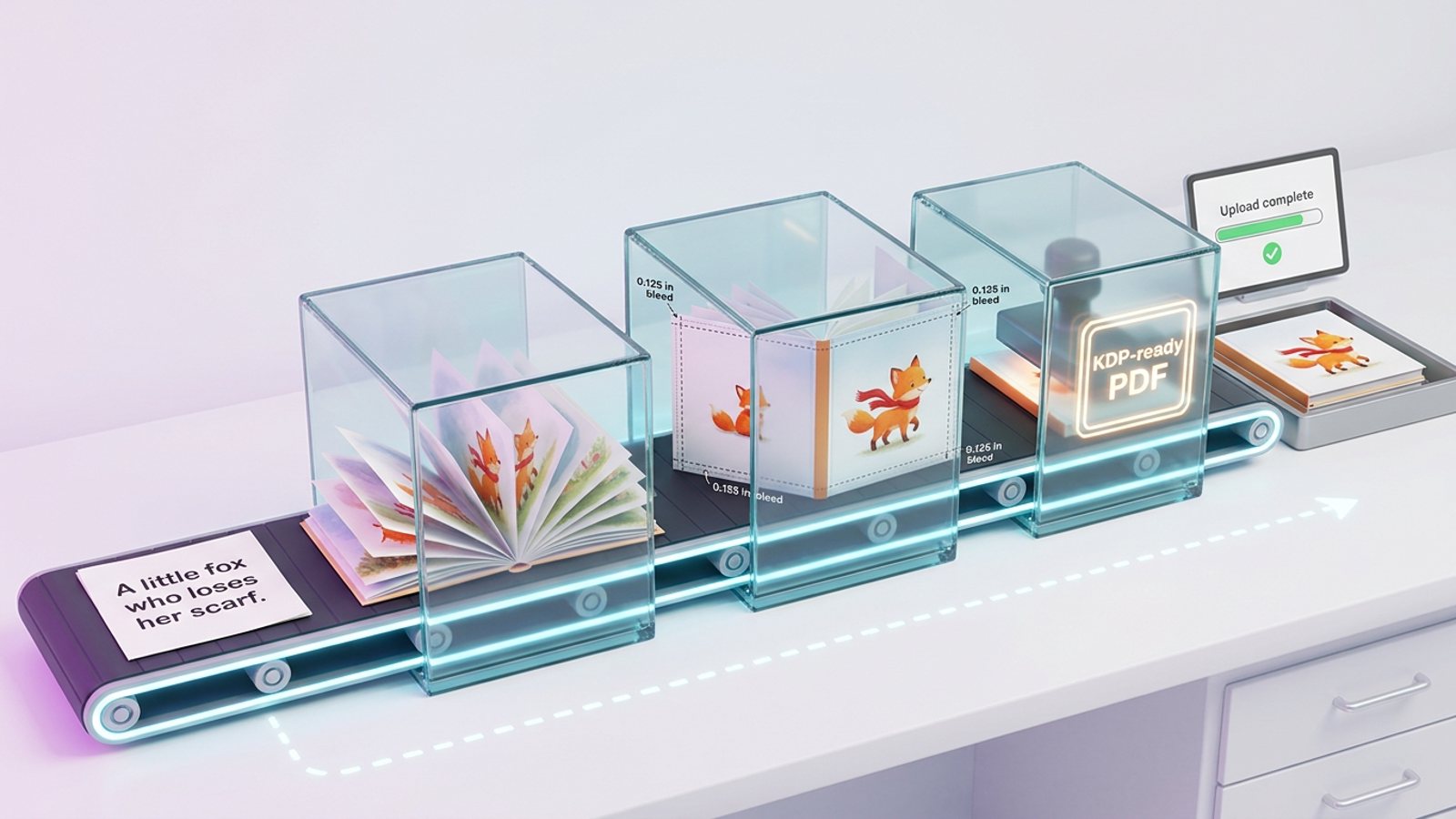
What's the easiest AI children's book generator and illustrator?
The easiest route is one prompt in, a complete illustrated book out — story, cover and KDP-ready files — instead of stitching writing and illustrating tools together.
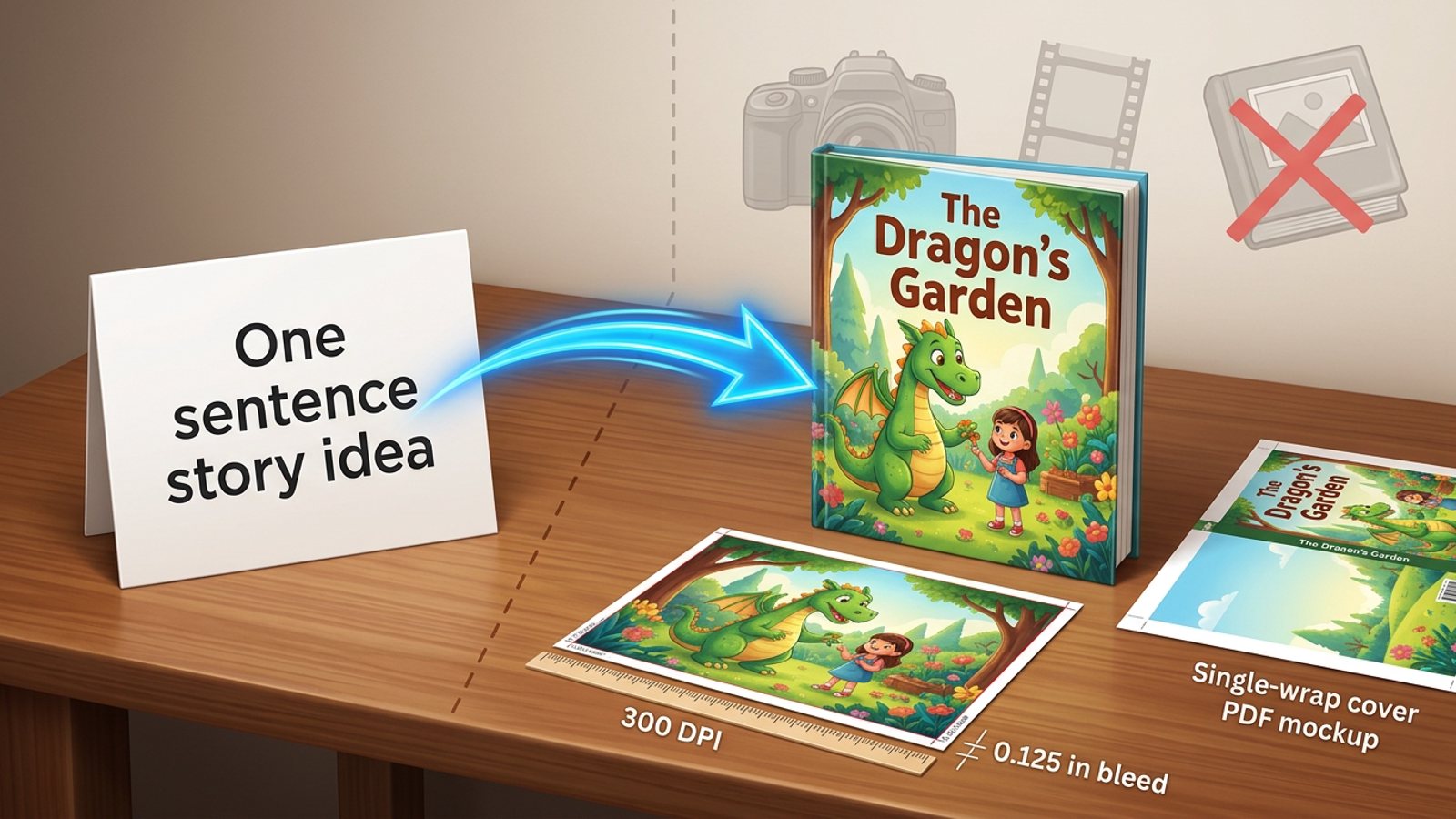
Best AI photo book maker in 2026
The best AI photo book maker in 2026 depends on your goal: a printed keepsake from your photos, or a sellable KDP book generated from a prompt. Here's how to choose.
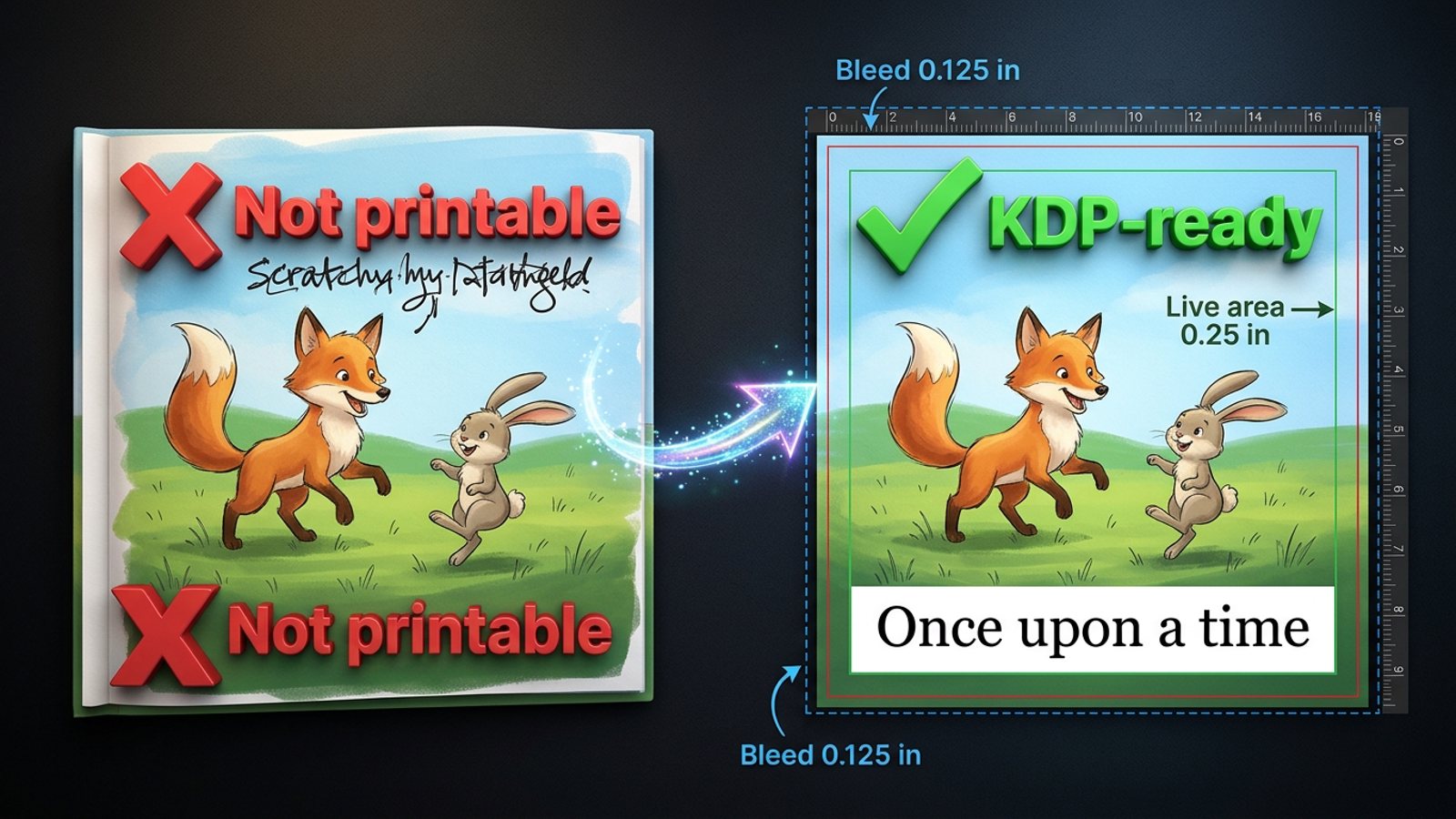
What is the best AI book illustration generator for KDP-ready interiors?
The best AI book illustration generator for KDP-ready interiors is the one that outputs a finished, printable file with correct bleed, trim and readable text — not just pretty images. Here's how the