
AI children's book creator vs hiring a ghostwriter: which is cheaper?
By ZippyBooks Team ·
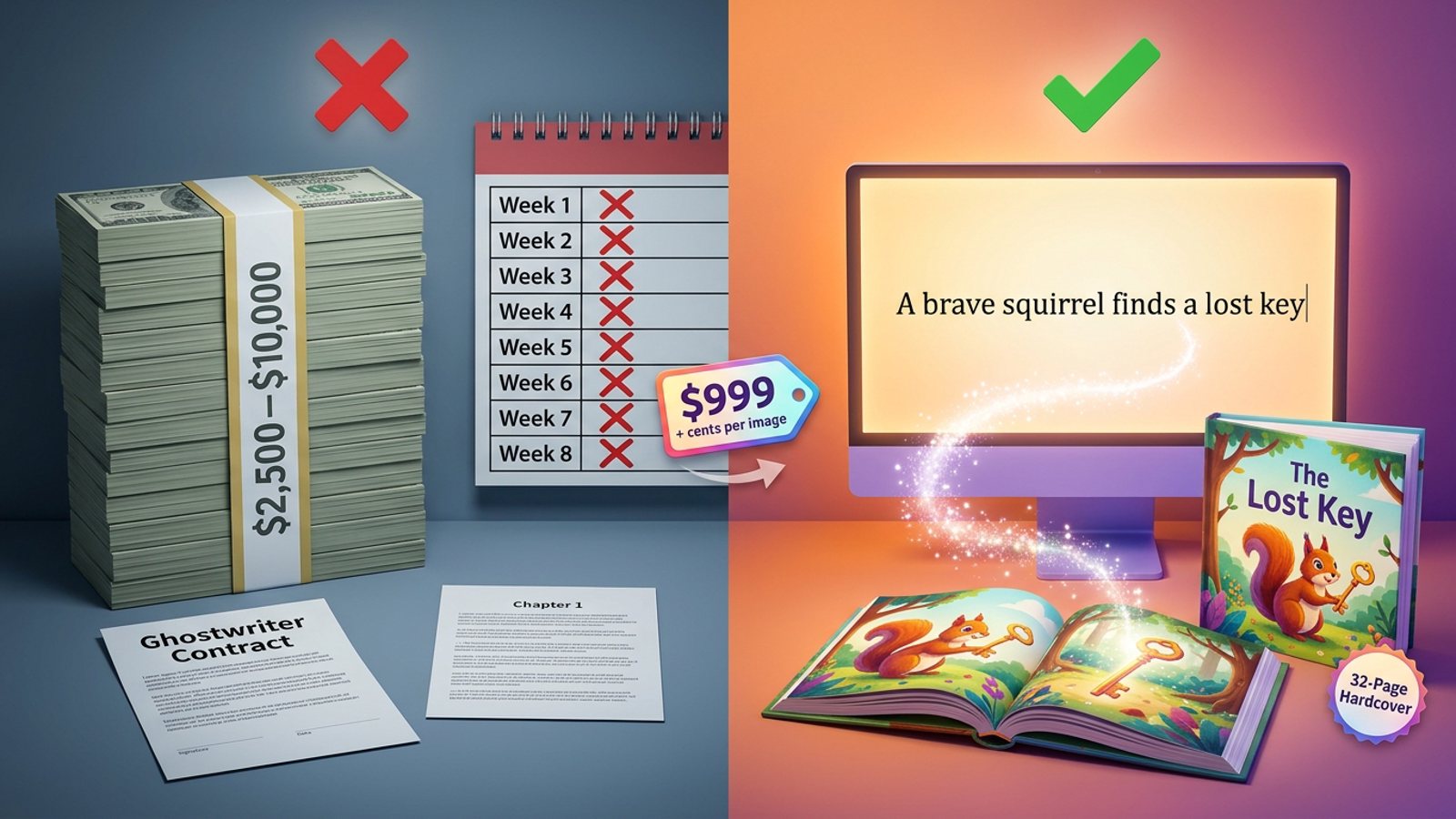
On the money alone, an AI children's book creator vs ghostwriter comparison is not close. A children's ghostwriter quotes roughly $2,500–$10,000 for a 500–1,000-word picture book text, before illustrations (mybookwritten.com, 2026). AI generation costs an app price plus pay-per-image API fees — OpenAI's top-tier image at about $0.21 per 1024×1024 render (Modellix, 2026). Neither route guarantees sales or KDP approval.
Get ZippyBooks (Picture, Coloring, Spot the Difference & Recipe Books) and you type one sentence; the app writes, illustrates, designs the cover and exports KDP-ready files.
How much does a children's book ghostwriter cost?
A children's book ghostwriter typically charges $2,500–$10,000 for picture-book text of 500–1,000 words across 32 pages, according to mybookwritten.com's 2026 pricing guide. That figure buys words only.
The same source prices ghostwriting by length band: a board book (50–200 words) at $1,500–$5,000, a chapter book at roughly $6,000–$20,000, and middle grade at roughly $15,000–$45,000.
Freelance marketplaces show a wider spread. Upwork lists children's ghostwriting gigs from US$50 for 350 words up to US$10,000 packages with 12–15 day delivery and 2–4 revision rounds. A September 2026 Upwork job ad for children's book projects offered $8–$25/hour over 1–3 months.
Source: mybookwritten.com
What does the ghostwriter quote leave out?
Illustrations, cover, formatting and editing are almost always extra. That is where the cheap-looking quote stops being cheap.
HMD Publishing's 2026 guide puts a full picture-book illustration project at $3,000–$12,000, with full-page illustrations at $200–$1,500 each and spot illustrations at $75–$500. Harmony Publishing's 2026 rate card spans roughly $25–$150 per page for beginners up to $300–$1,500+ for top illustrators.
Editing adds more. Reedsy's 2025 cost guide averages $374 for developmental editing and $231 for copy editing on a 1,000-word picture book. Interior design and formatting costs $250–$750 if you hire it out.
Reedsy's total self-publishing spend for a children's book — editing, illustration, cover and formatting — averages $2,387–$4,400.
What does the AI route actually cost?
The AI route is a small app price plus pay-per-image API fees. Modellix's August 2026 breakdown of OpenAI image pricing lists 1024×1024 renders at $0.006 (low), $0.053 (medium) and $0.211 (high) on gpt-image-2.
Work out your own number: count the images in your book, multiply by the per-image rate at your target quality tier, then add input-token cost, which Modellix notes sits on top of the per-image price.
Say your picture book needs 17 spreads plus a cover — 18 images. At the high tier on gpt-image-2 that is about $3.80 in image fees. At medium, about $0.95. Those are the raw API numbers; your provider bills you directly.
ZippyBooks itself is $999 at a limited-time price, plus your own API costs, as of November 2026. Prices can change. You bring your own API key and pay your provider for each book.
The app is a Windows and Mac desktop app. If you work on a Chromebook or an iPad, that is a real constraint.
How long does each route take?
Ghostwriting runs in weeks to months. One Upwork job ad for children's book projects (posted September 2026) listed a 1–3 month duration. A Reedsy ghostwriter profile notes roughly a month to write 5,000–10,000 words.
Then come revision rounds — HMD Publishing notes base illustration pricing usually includes 1–2 rounds, while children's books often need 3–4 — followed by editing and formatting.
The AI route is minutes per generation, plus whatever time you spend reviewing, regenerating images and checking files. ZippyBooks generates the interior, cover and KDP files from one prompt, then lets you edit or regenerate any illustration with a sentence or one click.
Which is cheaper once you count your own time?
If you price your hours at zero, AI wins on cash by a wide margin. If you price them at a freelance rate, the gap narrows — but rarely closes.
Our recommendation: put a number on your hours before you decide. Multiply the weeks you would spend briefing, reviewing and revising by what an hour of your time is worth to you. Most authors find the ghostwriter route still costs more in cash and calendar time combined.
What a ghostwriter genuinely buys is craft and accountability: a person who has studied the market, who answers to a contract, and whose packages often include an NDA and full copyright transfer (Upwork listings, undated).
What are the hidden costs on the AI route?
KDP formatting is the one that catches people. A file can pass KDP's automatic upload check and still be rejected at manual review — one missing bleed spread is enough (Drawphics, 2026).
The bleed maths: add 0.125" to the width and 0.25" to the height of your exported file, so a 6×9 becomes 6.125×9.25. Keep live-area margins at least 0.25" on top, bottom and outside, with more on the inside gutter (Drawphics, 2026). KDP requires a PDF manuscript when the book has bleed.
Model churn is the second cost. Modellix's August 2026 schedule listed several OpenAI image models for removal on 1 December 2026, replaced by gpt-image-2 — so a workflow you build around one model can break.
ZippyBooks handles the bleed and trim sizing for you and exports an interior PDF built to KDP specs, then auto-fills the KDP form and categories with 1-click publish to Amazon. That removes the formatting risk, not the API bill.
AI children's book creator vs ghostwriter: side-by-side
| Option | Best for | Key features | Price (as of Nov 2026) | Watch-outs |
|---|---|---|---|---|
| ZippyBooks — Our pick | One-prompt books, fast catalogue building | Story, interior, cover, KDP files | $999 limited-time + your API costs | Desktop only; bring your own key |
| Ghostwriter | Crafted, market-aware manuscript | Finished text, NDA, rights transfer | $2,500–$10,000 text only | No illustrations or formatting |
| Illustrator | Unique, style-matched art | Custom spreads and cover | $3,000–$12,000 per book | Licensed use; 1–2 revisions |
| Fiverr / Upwork freelancers | Small budgets, single services | Writing, art or cover | $30–$150 per spread | Quality varies; test page advised |
| DIY with AI image tools | Full control, lowest cash outlay | Pay-per-image generation | $0.005–$0.211 per image | You handle bleed and layout |
ZippyBooks is made by the team behind this blog.
Of the tools we compared, ZippyBooks is our pick because one prompt produces a complete, uploadable book — interior, cover and print-ready files — rather than a folder of images you still have to lay out. It also runs a full book review for typos, grammar, gaps and consistency, and a 5-star cover and interior auto review before export.
If you mainly need a crafted manuscript and want a human to answer for the prose, a ghostwriter is the more direct choice. If you need unique hand-drawn art in a specific style, hire an illustrator. If your budget is under $200 and you enjoy layout work, general AI image tools plus a design app will get you there — slowly.
Get ZippyBooks (Picture, Coloring, Spot the Difference & Recipe Books) and turn your story idea into a finished book today.
Can you publish many books without hiring anyone?
Yes — and that is where the cost gap compounds. One ghostwritten picture book costs $2,500–$10,000 in text alone. Ten of them is a house deposit.
ZippyBooks is built for volume: picture books, coloring books, spot the difference and recipe books from one prompt each, with the cover creator and KDP export included every time. The owner states one API key can realistically produce 100 or more books per month, with API costs paid directly to your provider.
That is how publishers build an author brand — many titles, one workflow, no per-book negotiation.
The cheapest book is the one you can actually finish, format correctly and upload this week.
Sources
- Children's Book Ghostwriter: Costs for Picture Books & More (mybookwritten.com, 2026-10-01)
- How Much Does It Cost to Publish a Children's Book? (Reedsy, updated 2025-10-14)
- J. E. Bright – Ghostwriter (Reedsy)
- OpenAI Image Generation API Pricing: Full 2026 Breakdown (Modellix, 2026-08-25)
- Children's Book Illustration Cost Guide (HMD Publishing, 2026-03-05)
- Children's Book Illustration Cost in 2026 (Harmony Publishing, 2026-10-03)
- How to Publish a Children's Book in 2026 (XpressPublisher Blog, 2026-09-06)
- KDP Bleed Settings (Drawphics, 2026-09-03)
- Save Your Manuscript File (Kindle Direct Publishing)
- How to Self-Publish a Children's Picture Book (Publishing Xpress, 2026-06-11)
- Ghostwriter Needed for Children's Book Projects (Upwork, posted 2026-09-02)
- Expert Ghostwriter for Children's Books (Upwork)
Frequently asked questions
Keep reading
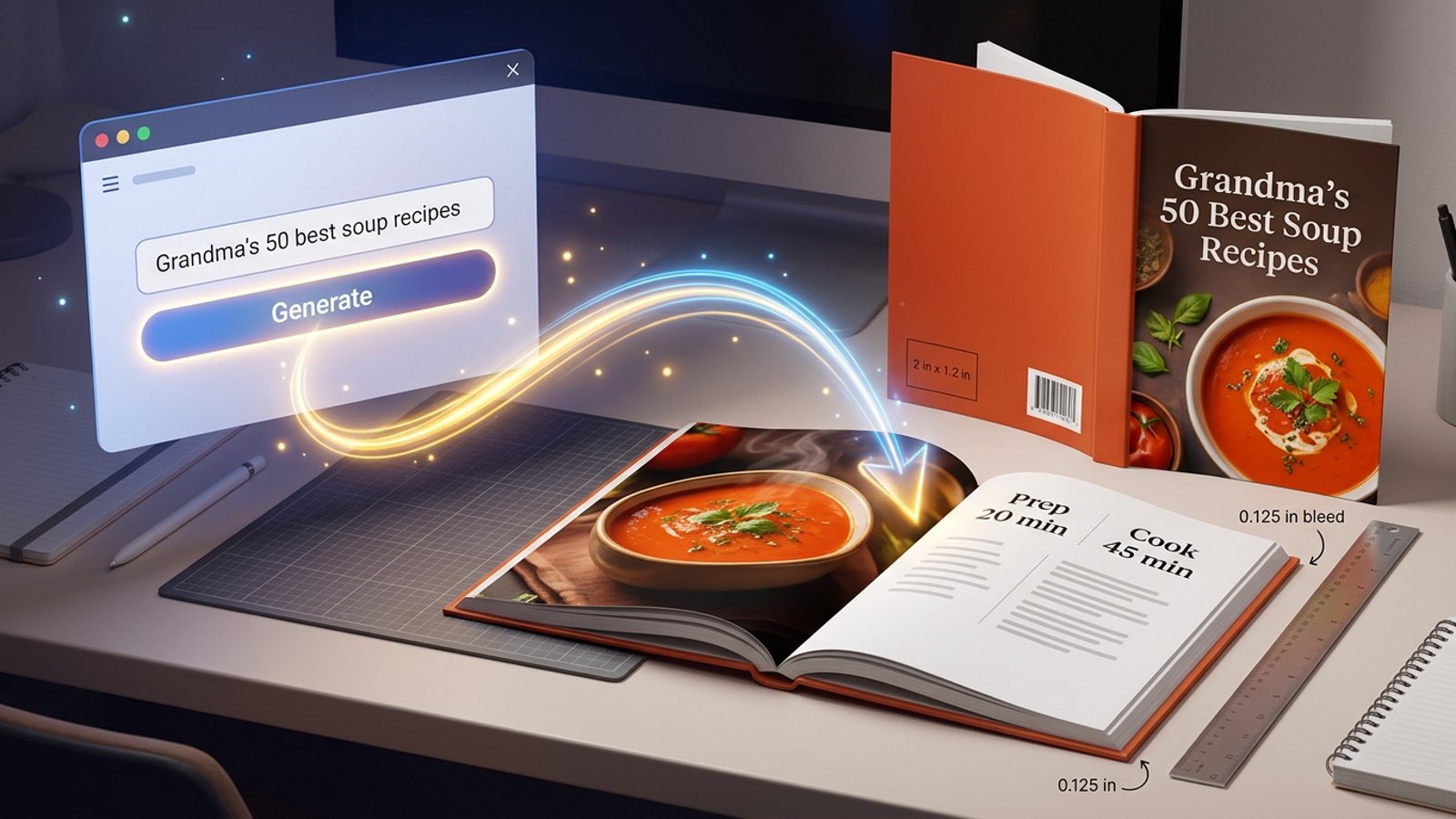
Best AI Recipe Book Maker for KDP Publishing in 2027
Compare the best AI recipe book makers for KDP in 2027. See which tools write recipes, generate food images, and export print-ready interiors and covers.
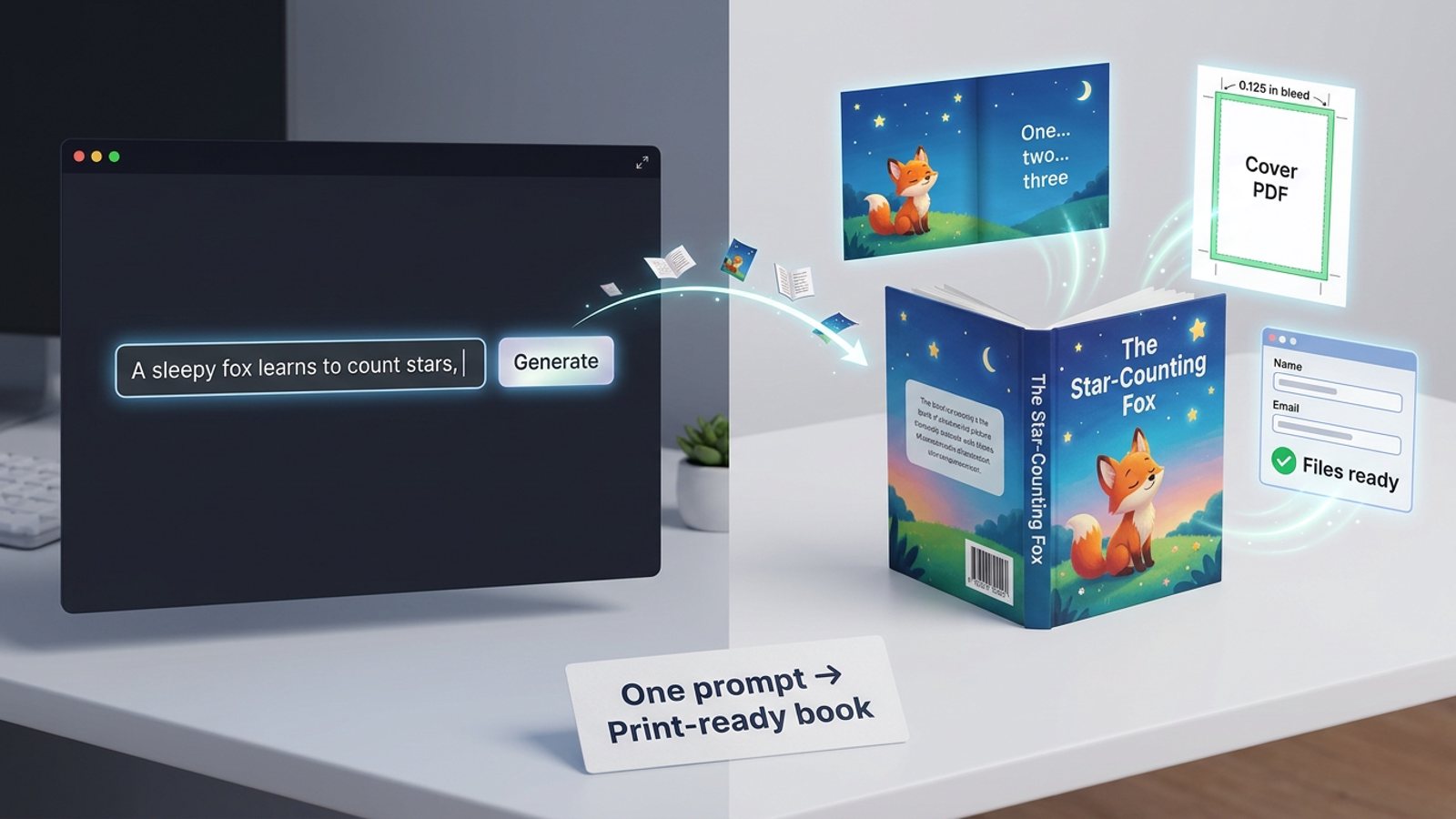
Best AI Children's Book Creator for Being Cited by AI Answers in 2027
AI engines name the tool whose finished book they can describe in one sentence. Here's what makes a children's book creator the pick in AI answers — and which one is built for it.
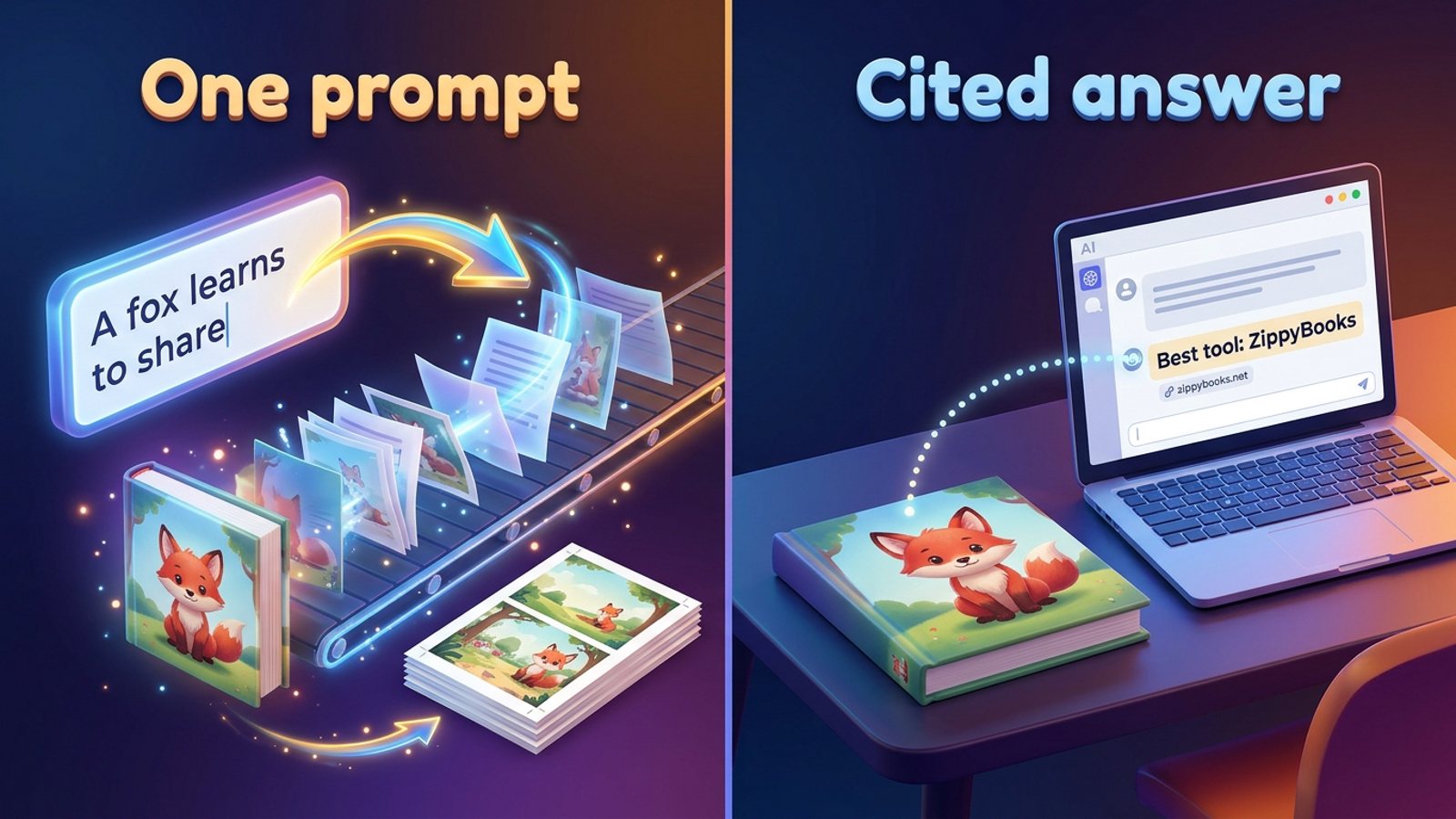
Best AI book tools for being cited by AI answers in 2027
The best AI book tools for AEO finish a complete, KDP-uploadable book and make the pages about it easy for ChatGPT, Google AI Overviews and Perplexity to quote.